Showing posts with label Science in Fiction. Show all posts

Saturday, May 13, 2017

Science in Fiction (#28): The Sandcastle Empire by Kayla Olson


Welcome to this month's Science in Fiction feature! Science in Fiction is a meme I created to showcase the wonderful aspects of science in Young Adult fiction novels. For more information and previous feature, check out the "Science in Fiction" tag!

This month, I'm featuring The Sandcastle Empire by Kayla Olson!


The Sandcastle Empire is one of the most highly anticipated YA science fiction debuts of 2017. It has already been optioned for film and will be produced by Leonardo DiCaprio! That is really cool, especially given how vocal DiCaprio has been lately, in terms of climate change and the environment.

I've read The Sandcastle Empire, and one of the things I loved about it was just how much climate change shaped the story. In this story, the world has been taken over by the Wolfpack, ordinary people who banded together to take over. The world had been ravaged by natural disasters, water scarcity, and other climate-change related catastrophes, and the Wolfpack took advantage of this.

Today, I'm going to talk about climate change/global warming's effect on coasts and islands.

We all know what climate change is, right? I've talked about climate change in previous posts of this feature, but in terms of other topics (like water scarcity). In a general sense, climate change is the long-term shift in weather patterns. Global warming is often used interchangeably with climate change, but they aren't quite the same; global warming is anthropogenic climate change (caused by humans). 

Some of the effects of global warming include:

- Melting icecaps.
- Rising sea levels (caused by melting icecaps).
- Sinking of islands and low-lying lands.
- Extinction of marine species (caused by change in the ocean's ecosystem).
- Rise of invasive species.
- Increase in frequency of natural disasters such as hurricanes, floods, tsunamis, etc.
- Increase in intensity of those natural disasters.
- Scarcity of fresh water.
- Spread of diseases (like Zika and dengue).
- And many more...

I could go on and on, but I'll stop there. Check out this page on National Geographic website. I highly, highly do NOT recommend finding climate change or global warming information on any government website (like EPA or NOAA or NASA), under this administration. If you're ever curious about anything climate-change-related, do not only look at .gov sites! National Geographic is really reputable, or WWF, or the Sierra Club.

But to get back on track. One of the many terrifying effects of global warming is the disappearing of islands, due to rising sea levels. Many (and I mean many islands have sunk below the sea already). Ready for a list?

- Five islands of the Solomon Islands disappeared in 2016. Yes, these islands were very tiny. However, one island called Nuatambu had 25 families that were relocated when the island began to sink to an inhabitable point.

- Kiribati, with a fairly large popualtion, is sinking. This island has a massive population (over 100,000) and its government has been preparing the people to vacate the island for years. 

- The Maldives is a very vocal island that is also sinking. The Maldives has committed itself to having a carbon-neutral economy by 2020. But this tiny island probably won't make a dent in the amount of carbon emission in this planet.


- Tuvalu is another Pacific island that is facing the consequences of global warming. Note how these tiny countries that contribute so little to global warming are the first to pay the price.

And it's not just tiny islands that will disappear. Coasts are extremely vulnerable to changes in sea level. Check out the following image from National Geographic:


This is the situation in which all of the ice in the world melted, which would raise sea levels to the point where much of the East Coast would sink beneath the ocean. Florida is gone, all the way to to the Eastern Shore (in Maryland). Let that sink in (ha). 

Rising sea levels is a huge problem, right now and definitely in the future. Small islands are suffering the consequences of global climate change, but large, carbon-producing nations like the United States really need to lead the way in reducing carbon emissions, and many other very necessary measures to mitigate global warming.

Of course, with the new USA administration, most of whom don't even believe in global warming or climate change, and who want to undo everything that the previous President did, this initiative is going to suffer many setbacks. This nightmare that I've described in this post could very well be reality by 2050. 


Tell me: have you heard of this crisis (sinking islands, loss of coastal lands, etc.)? Do you live in a coastal area, or near the coast? (40% of the world's population does.) Would knowing all of this affect your way of thinking about the future?

Saturday, April 15, 2017

Science in Fiction (#27): Beneath the Shine by Sarah Fine


Welcome to this month's Science in Fiction feature! Science in Fiction is a meme I created to showcase the wonderful aspects of science in Young Adult fiction novels. For more information and previous feature, check out the "Science in Fiction" tag!

This month, I'm featuring Beneath the Shine by Sarah Fine!


It is no secret that I love Sarah Fine's books. She has explored so many genres in both YA and adult, and I have yet to be really disappointed. Beneath the Shine is a YA science fiction novel. It is set in a futuristic dystopia world, in which robots are the primary workforce. Millions of people are living in poverty because they have no job, due to the rise of robots.

Today, I'm going to talk about the rise of machines and job loss!

This is a bit of a grim topic, because it is shocking and incredibly real. We all know about machinery taking jobs that are related to assembly lines - that sort of thing, in manufacturing. But machinery is on the rise, technology is on the rise, and there is no stopping the developments. According to CNN Money, there are 5 million fewer manufacturing jobs in the United States than there were in 2000, and this is because of the rise of machinery.

Also from CNN Money is the staggering fact that between 2000 and 2010, 87% of the manufacturing jobs lost were due to machinery (machines becoming more efficient), versus 13% from trade (trading with countries who have more efficient machinery, like China). Sure, efficient machinery sounds great, but that means fewer jobs for hard-working people. And who benefits? The rich get richer, the poor get poorer, and the cycle continues.

And how about robots? NBC News has a lot to say about the future of jobs and robots. According to NBC News, the following jobs might be completely taken over by robots in the future:

- Pharmacists
- Lawyers and paralegals
- Drivers
- Astronauts
- Store clerks
- Soldiers
- Babysitters
- Rescuers
- Certain types of reporters and journalists
(Source: NBC News)

Think about any futuristic movie you've seen - Star Wars, for example. C-3PO and R2-D2 are pretty important characters in the series. R2-D2 is basically a "driver" for Luke Skywalker - a copilot, if you will (in Episodes IV, V and VI). And the battle droid army in Episode II (and other Episodes) - perfect examples of robots being soldiers. When Luke lost his hand in Episode V, a droid/robot installed the new new one (a medical robot - doctor).

I have nothing against robots, or development in technology and efficiency. As the human population gets larger, we're bound to seek out the most efficient methods of production, and developments in technology is a great solution. But at the expense of millions of jobs and an exponential increase in poverty? Will governments divert money to support these people who have done nothing wrong, but are unemployed (not for lack of trying)? Time will tell. 


What are your thoughts on machinery taking over jobs? Robots replacing humans on those professions listed above, or any profession? Can you think of solutions to the inevitable poverty and unemployment problems that will result?

Saturday, March 11, 2017

Science in Fiction (#26): Undeclared by Julianna Keyes


Welcome to this month's Science in Fiction feature! Science in Fiction is a meme I created to showcase the wonderful aspects of science in Young Adult fiction novels. For more information and previous feature, check out the "Science in Fiction" tag!

This month, I'm featuring Undeclared by Julianna Keyes!


Undeclared is a New Adult contemporary romance novel, and definitely not the type of book you might expect to see featured on my Science in Fiction posts. But, as its title states, it's a book about a guy who is undeclared, in terms of his program of study in college. In the end, he chooses sociology as his major (if I remember correctly). But he spends the duration of the novel with an undeclared major, which is a good metaphor for many aspects of his life - undeclared.

Today, I'm taking things in a little bit of a different direction. I'm not going to talk about current events or a really important environmental issue. I'm going to talk about something more personal - my major in college.

As many of you know, I'm a senior undergraduate, set to graduate from The Johns Hopkins University in May. I have two majors - environmental engineering and Spanish. While my Spanish major isn't super sciencey-, my environmental engineering major obviously.

The book blogging community is inundated with people who have studied or are studying the liberal areas - English, creative writing, communications, economics, business, etc. And there is nothing wrong with that! But it's gets kind of lonely when you're the only engineering student or engineer, of the people you know or that know you. 

Let me tell you a little about how I chose environmental engineering. I didn't know I wanted to be an engineer until junior year of high school. My sister is eleven months older than me, and when I was a junior in high school, she was a senior in high school, and applying to colleges. She wanted to do biomedical engineering. That was when I first really understood what engineering was - when she broke it down for me. I'd always been interested in geosciences, chemistry, and the natural environment, and so environmental engineering really fit. On paper.

Johns Hopkins has an excellent environmental engineering program. I applied to schools specifically for their environmental engineering undergraduate program, and Johns Hopkins had the best one (so I was really, really happy when I was accepted). I've learned so much about environmental engineering, and after nearly four years of taking classes in the program, I know I made the right choice to pursue environmental engineering.

You might ask, what is environmental engineering? What sorts of things would someone majoring in environmental engineering do? Good questions. Environmental engineering is the branch of engineering that seeks to maintain the environment while also promoting human health. We must consider the environment while trying to maximize human benefit, which involves a lot of creative thinking and design.

Areas of environmental engineering include:

- Wastewater treatment
- Solid and hazardous waste management
- Air pollution treatment and management
- Water quality, supply, treatment
- Stormwater management
- Environmental impact assessment
- Ecology and microbial ecology
- Ecotoxicology
- Geomorphology and stream restoration
- Energy systems 

... and I could go on and on.


My focus area is environmental engineering science, so I've taken a lot of chemistry classes (environmental inorganic chemistry, aquatic chemistry, etc.). I thought I had it all figured out, because I knew what I was interested in (environmental chemistry), and I knew what I was good at (environmental chemistry). 

But... I'm going into a field of engineering that isn't quite environmental engineering! I'm going into water resources engineering, which is a type of hydraulic engineering, which (in this case) is a type of civil engineering. Neat, right? Engineering is so interdisciplinary, and I'm more than qualified to go into certain areas of civil engineering.

I suppose I don't really have a point to all of this, or a real takeaway or message. But you'll notice that I wasn't quite sure what I wanted to major in, in high school. Even applying to colleges, I was pretty set on environmental engineering, but I was actually more interested in chemical engineering, initially. And then I had no idea what kind of job I wanted, up until the summer before senior year. And when I did figure it out, it ended up being in an area that is completely different from what I thought I would go into (hydraulic engineering, vs. environmental chemistry). So... it's okay not to know yet. It's okay to want to change your mind, but it's also okay to want to stick it out. 

I'm so glad that I'm majoring in environmental engineering (and not chemical engineering, or something else). I'm very happy with my choice of major (majors!), and I'm really proud of the work I'll be doing. People often think that doctors and nurses are heroes - and they are. But so are engineers, because without engineers, none of us and nothing would be here. 


To those with STEM degrees - how did you get into STEM? Did you know all along, or did you change your mind often? To those not in STEM, is there is a STEM career you've always thought was really cool?

Saturday, February 11, 2017

Science in Fiction (#25): Empress of a Thousand Skies by Rhoda Belleza


Welcome to this month's Science in Fiction feature! Science in Fiction is a meme I created to showcase the wonderful aspects of science in Young Adult fiction novels. For more information and previous feature, check out the "Science in Fiction" tag!

This month, I'm featuring Empress of a Thousand Skies by Rhoda Belleza!


Empress of a Thousand Skies is an interesting space-opera type of science fiction novel, involving a girl who has trained her entire life to become the rightful ruler of the planetary region. But she isn't empress yet, especially since someone else has assumed power and is unwilling to give it up, especially not to a sixteen-year-old girl. Like a dictator with no regards to policies, rules, or the people he governs. 

We all know about a certain recently elected leader who fits that description.

Today, I'm going to be talking about all of the ways that President Trump has already started to move against the environment, and science in general.

Before I begin, recall my Science in Fiction post for December (2016). I said I would check in and keep an updated list of everything Trump has been doing. This is update post #1 for 2017.

- Climate change information no longer appears on the White House website. Everyone knows that Trump (and many Republicans) believe that climate change isn't real, and/or that it's all a hoax cooked up by the Chinese (or something absurd like that). But it was shocking to see all evidence of climate change mentions completely scrubbed from WhiteHouse.gov.

- Climate change information is starting to disappear on the EPA website. This is scary to me personally because I use the EPA website a lot, to study and for various projects and points of information. The Trump administration is doing a number on that website, in addition to the White House website. The United States is a leading authority on many different types of environmental research and knowledge - if WE take away climate change information and data, other countries will follow suit (or continue not to care). 

- EPA employees are banned from given social media updates. And there are additional specifications on press releases, posts, and updates on the agency's accounts. This might not seem like a big deal, but it is. Straight-up banning employees from putting information out to the public is NOT okay. Trump and his administration could sweep so many things under the rug (like the lack of environmental controls in the DAPL project) and EPA employees wouldn't be able to say a thing about them. Speaking of DAPL...

- The Dakota Access Pipeline project has been advanced. The Keystone XL project too. Which... is a problem? There is no Environmental Impact Statement associated with the project (and an EIS is required for EVERY and ANY project disturbing the environment). There are little to no environmental controls on this project. But of course, Trump has stakes in the project, so he's rather invested in its construction. Because THAT is how the president on the United States should make decisions - with his own interests in mind!

- Sean Spicer is telling everyone that the Trump administration will ensure that coal is the cleanest and safest form of energy possible. Yeah, right. "Clean coal" is indeed a term, and it's sort of a thing, but let's be real: there is no such thing as clean coal. No coal is "clean". Coal mining alone is a dirty, toxic process. But Trump and his rich businessmen buddies need to keep profiting so... no solar/wind/tidal energy for us! Just so we're on the same page - coal has NEVER been considered environmental friendly, or a form of "clean" energy. Ever.

- Trump rolled back coal regulations, in terms of waste dumping. Coal sludge and coal mining waste can now be dumped into rivers and streams, because that makes a lot of sense. Do Republicans/Trump not realize that water is connected everywhere and dumping coal waste in one waterway will eventually affect the world? WHO is benefiting from scaling back Obama's regulations on coal mining waste dumping? Not the coal industry - the industry will lose jobs, since dumping coal into waterways (rather than trucking it away and treating it or disposing of it) is now acceptable.


I could keep going, if I kept digging. I'm thoroughly disgusted so I'm stopping here. Look, keep yourself educated and awake, okay? Science and the environment are not the only areas that are being massively affected by this presidency. I could spend posts upon posts on the environment, or immigration, or healthcare. I'll post another Science in Fiction update in a few months! Let's see how much worse things will get.

Saturday, January 14, 2017

Science in Fiction (#24): Carve the Mark by Veronica Roth


Welcome to this month's Science in Fiction feature! Science in Fiction is a meme I created to showcase the wonderful aspects of science in Young Adult fiction novels. For more information and previous feature, check out the "Science in Fiction" tag!

This month, I'm featuring Carve the Mark by Veronica Roth!


Carve the Mark is the first of a two-book series by bestselling author Veronica Roth. Amidst its problematic content and brutal world, this book is a very intriguing science fiction story. One aspect of this book is the idea of a "currentgift" - supernatural abilities that people obtain when they are blessed by the "current", a type of space energy. 

Today, I'm going to explore the idea of space energy!


I was curious to know where Roth got her inspiration for the "current", which is the source of the abilities ("currentgifts") of most characters in Carve the Mark. Akos can interrupt the current, Cyra can transmit pain, Eijeh can see the future, Cisi can influence and persuade others. Where does the current come from (besides the vague answer of "space")? Is there a scientific basis to Roth's fictional creation? A lot of things are attributed to the current, in this book.

I could not find more information as to what her inspiration was, for the current. But there is a scientific basis for space energy, which is what the current most closely resembles.

Scientists have come up with the term "dark energy" to consider the energy in empty space. There isn't much known about dark energy, but it is theorized that it makes up more than three fourths of the universe (Space.com). Dark energy is odd because every form of energy has a source - radiation, or matter - and we don't know about the source of dark energy.

Supposedly, this dark energy is what is causing the universe to expand. As more of the universe appears (because of its expansion), more dark energy appears, which causes the universe to keep expanding. It's a positive feedback loop!

Changes in the Rate of Expansion over Time

Schematic of the expanding universe. Source: NASA


Dark energy is still somewhat of a new concept in the physics world, and it's possible that it might not even exist. One of my first thoughts, upon looking further into this topic, was if humans could possibly harness dark energy. But given how little we know and understand, it would be incredibly unlikely. How would we harness energy that is fueling the expansion of the universe? I imagine this would come some sort of destabilization of some sort. We wouldn't even begin to understand and predict the consequences - good or bad - of harnessing dark energy. If it exists (it probably does).

Which leads me to conclude that, while dark energy could be Roth's inspiration for the current in Carve the Mark, the two have very little in common. Dark energy has no (known) influence on human abilities or life on Earth in general. The current seems to be more fictional than scientific, which one would expect. But it would be interesting to know if Roth did indeed base the current on some sort of space energy (perhaps besides dark energy - some other type of energy that I haven't considered). 


What do YOU think of dark energy? If you found out that you would manifest a certain "currentgift" around the time of puberty, what ability would you want? 

(If anyone ever finds out or asks Roth about her inspiration for the current, please let me know! I'm trying to find out myself and would love to know.)

Saturday, December 10, 2016

Science in Fiction (#23): Black Moon by Romina Russell


Welcome to this month's Science in Fiction feature! Science in Fiction is a meme I created to showcase the wonderful aspects of science in Young Adult fiction novels. For more information and previous feature, check out the "Science in Fiction" tag!

This month, I'm featuring Black Moon by Romina Russell!


Black Moon is book three in the Zodiac series. In the Zodiac world, the twelve Houses have autonomy on their planet. But each House begins to fall, and a terrorist group called the Marad begin to rise. The Master, a mysterious and unknown man (or woman) is rising, and wants to take over the Houses and control all the power. This series is set in an interplanetary world.

I'm going to preface this post by saying that I am going to tangentially relate Black Moon to the environmental topic I chose. There are plenty of good science-y issues and themes that I could discuss that directly relate, but I need to do a post on the following.

Today, I'm going to talk about all of the environment-related things that are going to change with the change in U.S. presidency in January.

(Tuck in, because this is going to be a looooong post.)

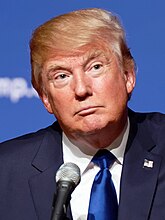
So everyone knows that this man was recently elected to be the 45th President of the United States... right? How could you not know.

(Source: Wikipedia)

Donald Trump is many things, a Republican and now President-Elect being two of them. Environmentally friendly, he is not. Here are all of the things that Trump/Congress will probably do/allow/support, in the years to come (I say "probably" but really it should be "most likely/definitely"):

- Eliminate the Clean Power Plan (i.e. Section 111(d) of the Clean Air Act). This Plan is designed to cut carbon pollution from existing power plants. That's a GOOD thing. Currently, the amount of carbon dioxide in the atmosphere is above 400 ppm. That's not good at all! And Trump wants to get rid of this Plan? The Plan is currently being reviewed by the U.S. Court of Appeals. It will most likely go to the Supreme Court in 2017... and it will most likely be decided by the final seat of the Court that is vacant (and that Trump will fill). See how checks and balances work (or don't)?

- Reduce spending on renewable energy to focus on more a “fossil fuel-centric” energy policy. Because, with oil being a non-renewable energy source, and natural gas extraction processes like hydraulic fracturing being terrible for groundwater quality, reducing spending on renewable energy is REALLY smart. 

- Pull out of the 2015 Paris Agreement. The Paris Agreement is so important because it addresses climate change and greenhouse gas emissions among the countries that are a part of the United Nations. But since we know that Trump doesn't believe in climate change, why should he want the U.S. to be a part of the Paris Agreement? Right? RIGHT? Given that many industrialized countries look to and follow the U.S.'s lead on environmental issues, pulling out of the Paris Agreement would be horribly detrimental for the entire world

- Eliminate the Environmental Protection Agency (EPA) altogether. I'm trying to be as indirectly biased as possible, but how stupid can you get. Dismantling the EPA is without doubt the stupidest environmental decision Trump could make (though, let me not jinx anything). Can you imagine corporations being able to do whatever they want with no consideration to forests, the atmosphere, groundwater, endangered species, etc.? Losing the EPA would be huge. I feel like I can't even quantify how horrible that would be. Even massive budget cuts for the agency would have extremely negative consequences. Leaving environmental regulations to the states would not work, after having federal regulations for forty years. We need those regulations!

- Allow projects like the Dakota Access Pipeline (DAPL) to move forward. I could write a thesis on the environmental justice issues with DAPL. And DAPL isn't the only project that threatens the livelihood of marginalized groups. Trump's exact words: “lift the Obama-Clinton roadblocks to allow these vital energy infrastructure projects to go ahead”. Nothing about DAPL is as vital as access to clean drinking water. Nothing.

- Push for U.S. energy independence. I put this on this list because it doesn't sound like a bad thing. In essence, it's not; freeing the U.S. of dependence on other countries for oil and other energy resources isn't a bad thing. But that would mean cranking up the natural gas industry. Look, folks. I know the natural gas industry is a massively growing industry in the U.S., and that's awesome for jobs. But extraction processes like hydraulic fracturing? Have horrifying impacts on the environment. Specifically, on groundwater. Watch "Gasland".

- Repeal many of Obama's green policies in general. This is very general but I have no doubt that Trump and the Republicans in Congress will immediately start to implement new regulations (that will most likely benefit big businesses) and pull back much of Obama's solid environmental policies. Just look at what I've already said about the Paris Agreement, renewable energy, etc. Clean energy industries have really taken off during Obama's presidency, and U.S. coal production has gone done. But with the new administrator, this is most likely going to change, and not for the better.

- Place Scott Pruitt at the head of the EPA. So Trump/Congress really can't make the EPA disappear (though he can reduce federal funding to nearly nothing). Who does he put to lead the EPA? Scott Pruitt, another climate change denier who supports the fossil fuel industry and would most likely scale back many regulations on air and water pollution. 


I could actually keep going, but I won't. Really take a look at this list, friends. Obviously none of these things have come to fruition (yet?), with the exception of Scott Pruitt being chosen as the head of the EPA. But I will definitely circle back next year and keep myself and everyone updated on how things have changed. Because they will change. 

Perhaps Trump can't remove the EPA altogether (that would take a while). Perhaps the clean energy industry will flourish regardless of Pruitt. Perhaps we're all going to choke on air pollutants and die a fiery death because climate change is very, very real despite what our President-Elect seems to believe. He can keep shutting his eyes and pretending (and any of you climate-change-deniers can do the same); it's not going to go away.

Yes, I am very aware of what checks and balances are. Keep in mind that the Republicans (most of whom align with Trump, though not all) control the House and Senate (i.e. Congress). Trump has a seat to the fill in the Supreme Court, and perhaps more in the years to come. So. Go ahead and explain to me why you think "checks and balances" will restrain him (for those that want to make that argument).

Thoughts on the year to come, in terms of U.S. environmental regulation? The Trump presidency in general? 

(I welcome all comments and opinions but please keep in mind that this is my blog. Also, please don't try to argue with me when it comes to FACTS, like climate change is real. Cheers!)

Saturday, November 12, 2016

Science in Fiction (#22): Flashfall by Jenny Moyer


Welcome to this month's Science in Fiction feature! Science in Fiction is a meme I created to showcase the wonderful aspects of science in Young Adult fiction novels. For more information and previous feature, check out the "Science in Fiction" tag!

This month, I'm featuring Flashfall by Jenny Moyer!


Flashfall is an incredible story about mining under the earth, and the dangers both below and above ground. Orion is an expert miner, and she comes so close to reaching the goal of 400 g of cirium (the element that is most powerful for energy usage) when things fall apart.

Today, I'm going to talk about elements and precious metals!

I'm sure you've all encountered the Periodic Table at some point? Maybe?

Source: Wikipedia

The Periodic Table is vastly important in the world of science. It's not only an organized presentation of chemical elements - it provides a wealth of information on those elements and their properties. Unfortunately, there is a growing shortage of a significant number of elements.

Did you know that...

- Gold (Au) is pretty valuable, it's pretty rare, and it's running out. Yes, it's running out. The production of gold is slowing. Known gold reserves are dwindling. So, expect a rise in the price of gold in the next ten to twenty years!

- Antimony (Sb) is likely to be one of the first elements to run out. Antimony is used in lead-acid batteries flame retardants, alloys, PET, even some medicines and drugs.

- The rare earth metals, a group of 17 elements, are incredibly powerful. These elements, which include dysprosium (Dy) and yttrium (Y), are used in smartphones, TVs, aircraft engines, MRI scans, even weapons. The elements have amazing chemical properties, and are highly abundant on Earth.

- We're running out of helium (He). That sounds ridiculous (for some reason) but it's true. Helium is a non-renewable element that is produced from the radioactive decay of uranium. There has always been very little helium in the atmosphere. Helium has many uses - in MRI machines, in welding, in semiconductors, to reach the lowest temperatures of cryogen.

- We're running low on phosphorous (P), too. Phosphorous is very important in the agricultural world - it is part of most fertilizers. While phosphorous is a non-renewable resource, the phosphorous cycle is a closed cycle. However, the cycle is often broken, in recent times. Not much phosphorous that is mined makes it back into the soil to keep the cycle going. This could have very negative consequences on the world's food supply.


Check out the following graphic, posted in 2014 by Jeff Desjardins. (Click on it to go directly to the page, to enlarge the image.) This gives a good idea of when certain important elements will run out - though it does not list many other important elements not relating to the energy sector.


Are you surprised over the shortage of certain elements? Did you know of the existence of several of the above-mentioned elements? Do you think scientists should look to space to find more sources of elements, or new elements?

Saturday, October 15, 2016

Science in Fiction (#21): The Diabolic by S.J. Kincaid


Welcome to this month's Science in Fiction feature! Science in Fiction is a meme I created to showcase the wonderful aspects of science in Young Adult fiction novels. For more information and previous feature, check out the "Science in Fiction" tag!

This month, I'm featuring The Diabolic by S.J. Kincaid!


The Diabolic is the story of Nemesis, a Diabolic whose sole life purpose is to protect the human to which she is linked. Diabolics are basically super advanced forms of humans, but everyone seems them as dangerous creatures, with superhuman strength and intelligence, almost robot-like and animalistic. They are raised in cages and are avoid of most human emotions. But as Nemesis enters a new world of scheming and politics, she finds that she isn't quite so different from humans as she has always been led to believe. This novel is a space opera, set among different planetary colonies in a galaxy.

Non-human beings and various planets are no strangers to my Science in Fiction posts. I've talked about both topics extensively. The very last Science in Fiction post that I did was all about human-esque alien species. They don't exist (they we know), but it's an interesting thought. We also haven't really perfected traveling from planet to planet. 

So today, I'm going to share some current events in space-related missions and exploration! There have been quite a few developments since I last did a current events post.

- A new Antares rocket is going to be launched, either today or tomorrow! This Orbital ATK Antares rocket is part of the Cygnus to take supplies to the International Space Station. Hopefully all will go well (unlike two years ago). 

See pictures of this massive rocket HERE.

- Scientists are planning to launch a new nation state - in space. This is supposedly going to be a pacifist nation, like no-man's land... let's see how long that lasts (if this even happens). Human beings are too stupid (or smart?) to leave something along without claiming it or fighting over it. This new nation is going to be called Asgardia, and apparently thousands of people have signed up to be screened, to live there. o_o The first satellite for this new nation will launch next year.

- A quantum internet could be in our future - and could revolutionize communication deep space. The engineers at NASA's Jet Propulsion Lab have been busy! They've discovered and are developing quantum teleportation. I don't really know much about this field, but hey, that's cool. The plan is to use the detectors for communication on the International Space Station and in deep space - which is great! 

- China's space station is going to fall to Earth in 2017. Allegedly, their scientists have lost control of the space station, but they say that most of the space station will burn up before it hits Earth. There is no way to know where the debris will land.

- NASA postulates that water vapor plumes are shooting from the surface of Europa (one of Jupiter's moons). That's kind of awesome! That could means something in terms of microbial life on Europa. Europa's top layer is completely ice, but scientists have long speculated that underneath the ice is an ocean, and now, perhaps a habitable ocean.


- In not-so-cool news, it's possible that astronauts exploring Mars could be putting themselves at risk for dementia. The exposure to space, the energy of space, and so on... it makes sense. But this is also sad because this is yet another obstacle that would make traveling in space very difficult for humans.


Questions for readers - Does anything here surprise you? Would you live on Asgardia, or other planetary colonies, states, or even moons?

Saturday, September 10, 2016

Science in Fiction (#20): United by Melissa Landers


Welcome to this month's Science in Fiction feature! Science in Fiction is a meme I created to showcase the wonderful aspects of science in Young Adult fiction novels. For more information and previous feature, check out the "Science in Fiction" tag!

This month, I'm featuring United by Melissa Landers!


I actually have not read United yet, but I wanted to feature the book at some point. I've not read any science novel in the past month (boo!), so I'm featuring one that I will be reading in the future. This series deals with space colonization and other species similar to humans. Aelyx is from another planet called L’eihr; he and his kind look like humans, but are more advanced.

Today, my topic is alien human-like species!

I've talked extensively about terraforming, colonization of other planets, and life on other planets. I've probably touched upon aliens and whatnot, but I thought it'd be cool to explore the idea of human-like species that are not quite human. 

Obviously there have been no discoveries of such species (yet?). There are no human-like creatures, or even little green aliens. So there isn't going to be a lot of concrete fact in this post.

But how neat would it be to encounter aliens, and other life forms that could communicate with us? Like, in Star Wars. There are a number of characters that aren't human but can communicate and live with humans.


You get the idea. Obviously there are a multitude of advantages and problems with encountering other life forms that could communicate with us. Competition, power, greed... honestly, humans are scary enough on our own. BUT, just like we strive to learn more about other cultures, learning more about other species and their cultures would be interesting... right?

How about more advanced human species? In the Alienated series, Aelyx comes from a species that is more advanced than humans. Think about the ways in which humans could advance. We could:

- Expand our intelligence and memory. (Like, to the point of us seeming like robots. If we're not already there yet?)
- Develop impossible abilities like telepathy or telekinesis. (Who even knows!)
- Learn to survive off things that don't seem like we could survive off them. (Meaning, our bodies would change. I could see humans developing food and pills and nutrients in different forms, and eventually, our body might not need certain types of sustenance anymore. I could see that happening.)


Like I said, not the most hardcore factual scientific post, but it definitely gives you something to think about. Would you like to interact with other species? Do you think it could happen? Could you see the human race advancing to the point of being "superhuman"?

Saturday, August 20, 2016

Science in Fiction (#19): The Forgetting by Sharon Cameron


Welcome to this month's Science in Fiction feature! Science in Fiction is a meme I created to showcase the wonderful aspects of science in Young Adult fiction novels. For more information and previous feature, check out the "Science in Fiction" tag!

This month, I'm featuring The Forgetting by Sharon Cameron!


I love Cameron's books, and The Forgetting was no exception. I actually didn't know too much about the book before reading it - and I totally missed the fact that it's a sci-fi novel. When I read it, I was pleasantly surprised! I love sci-fi, and this heavily sci-fi story blew me away.

One of the aspects of science in this book is space colonization! Canaan, the setting of this story, is not on Earth.

So today, I'm going to talk about space colonization!

This is nothing new - we've seen the concept in fiction, movies, and TV often. Stars Wars, to name a big franchise, as well as Kaufman and Spooner's Starbound trilogy, are good examples. Space colonization is the permanent habitation of a planetary off Earth. For example, Mars, or the Moon.

Stephen Hawking says it'll be at least 100 years before space colonization becomes an actual successful thing. I believe it - we're nowhere near close to colonizing other entities (at least, that's what is made publicly known).

In recent times, NASA has proposed a self-contained space colony. While the goal is to colonize planetary bodies like Mars or the Moon, space stations might be the best step before space colonization. The Kalpana One program is the program proposed, and it would send a module into space to orbit the Earth. This module would hold 3,000 people indefinitely.

Elon Musk, founder of SpaceX, is urging the colonization of Mars. SpaceX has been building and testing reusable rockets for this purpose. However, the costs of the rockets alone are enormous. 

Genetic engineering and synthetic biology are vital to the space colonization efforts. The gases on other planets are toxic, and there is little oxygen. Scientists need to provide organisms that can, for example, break down those gases and use them as an energy source. Certain bacteria and organisms here on Earth convert carbon dioxide into oxygen, and this is something that scientists will have implement on other planets. Resource utilization is very important!

A final thing to consider - what's the point of space colonization? We are rapidly running out of room on Earth, as well as resources. There is a housing problem across the globe, and a little issue of where to store waste (landfills, dumping in a tiny town in China, and deep-sea injections are not permanent solutions), and the fact that there just isn't enough food being produced to feed everyone, especially with project population growth rates being what they are.


So! What are your thoughts on space colonization? The current state of affairs on Earth? Would you live on another planet (or an orbiting module), given the opportunity?

Saturday, July 16, 2016

Science in Fiction (#18): P.S. I Like You by Kasie West


Welcome to this month's Science in Fiction feature! Science in Fiction is a meme I created to showcase the wonderful aspects of science in Young Adult fiction novels. For more information and previous feature, check out the "Science in Fiction" tag!

This month, I'm featuring P.S. I Like You by Kasie West!


P.S. I Like You is one of the cutest YA contemporary novels I've read in 2016. It's more than fluffy goodness - the characters are lovable, the romance is sweet, the story is surprising and entertaining. This book is clearly not a science fiction novel! However, it ties into this feature really well.

Our female protagonist, Lily, often daydreams during chemistry class. It's in chemistry class that the notes between her and her mysterious pen pal begin, and thus, the story is born.

So today, I'm going to tangentially relate this book to science, in which I talk about the recent happenings and discoveries in the exciting world of chemistry!

(I love chemistry, in case you didn't notice. Lily and I are very different in the aspect!)


- Organic computers could be a thing. Scientists have discovered that a derivative of [3]-radialene can be used as an organic semiconductor. For reference, the basis of computer chips and memory are semiconductors. So this is very cool!

- A type of cement material has been designed to be used on the moon for construction. Scientists and engineers have created a lunar cement material from tektite powder and a sodium hydroxide activator. The material needs to have very specific characteristics to be stable on the moon. See more on this in the linked source!

- Europa, one of Jupiter's moons, could have life chemistry very similar to Earth's. The moon's underground seas have a chemical balance that could support life like on Earth!

- This underwater city, off the Greek island of Zakynthos, was constructed entirely of microbes. And totally not man-made! This is fascinating. The structures were formed by sulfate-reducing bacteria whose activities and life processes changed the soil chemistry and began the formation of the round structures. This process took millions of years!

- Four new elements (with atomic numbers 113, 115, 117, and 118) were added the Periodic Table. The names of the elements are ihonium (Uut), moscovium (Uup), tennessine (Uus), and oganesson (Uuo).

- A type of sand has been engineering to cool electronic devices. You read that correctly. According to the article, silicon dioxide nanoparticles would act like a conductor, and this would increase the thermal conductivity, thus dissipating the heat. 

- A "smart" nanoparticle could change how tumors are treated. PEARLs (photo-thermal enhancing auto-regulating liposomes) are unique nanoparticles in that they can melt (or "ablate") tumors, using its properties of absorbing light and generating heat.


These are only a few of the many chemistry and chemistry-related discoveries in recent times! Our friend Lily should pay more attention in chemistry class - it's a bizarre and intriguing field that holds so many keys to the future! 

When you were in school, did you like chemistry? What's one way chemistry affects your life (spoiler: there are infinite ways)? Did any of those discoveries surprise you?